Evidence-first Flexigenics researchUpdated September 28, 2026
Ingredients

Flexigenics Ingredients: Full Formula & Supplement Facts

A transparent breakdown of the exact label, the 450 mg proprietary blend, each listed ingredient and what current research can—and cannot—tell us.

%s

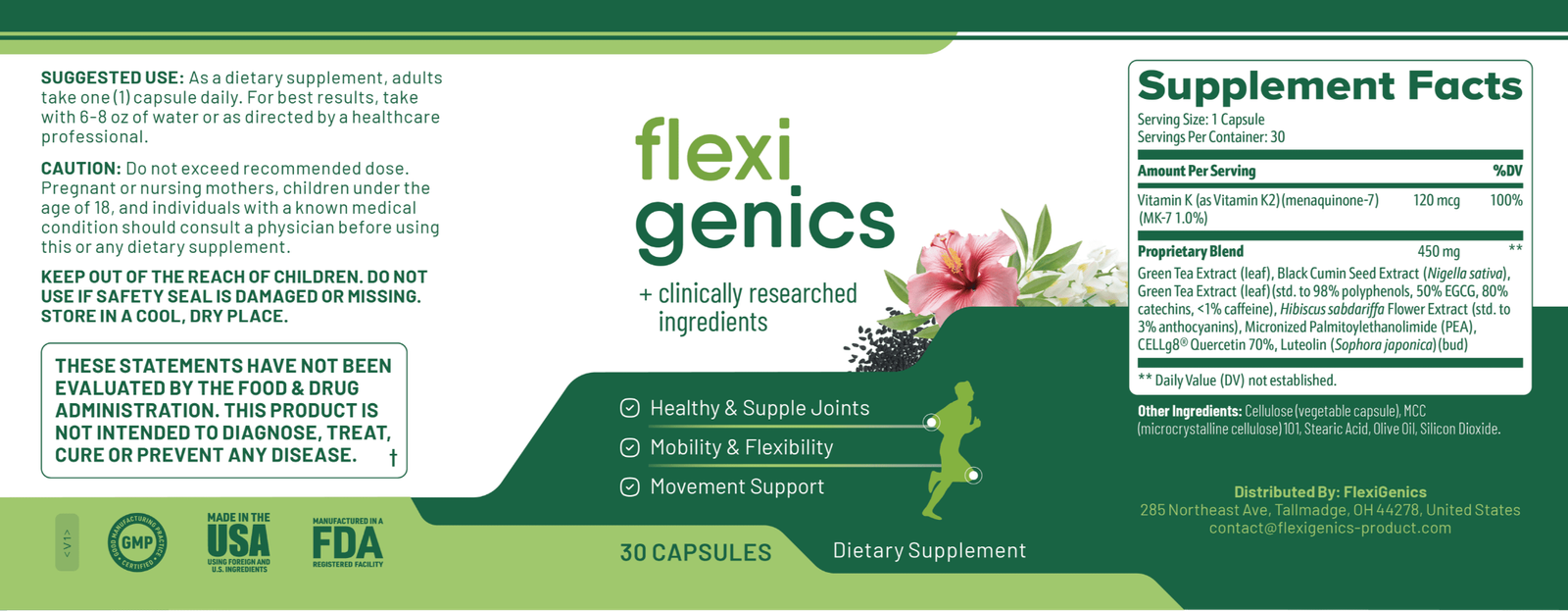
Supplement Facts: exact label information

IngredientAmount per servingDV
Vitamin K (as Vitamin K2), menaquinone-7 (MK-7 1.0%)120 mcg100%
Proprietary Blend450 mgDV not established

The proprietary blend contains green tea extract, black cumin seed extract (Nigella sativa), green tea extract standardized to 98% polyphenols, 50% EGCG, 80% catechins and <1% caffeine, Hibiscus sabdariffa flower extract standardized to 3% anthocyanins, palmitoylethanolamide (PEA), CELLg8® Quercetin 70% and luteolin from Sophora japonica bud.

Dosage transparency limitation: the label gives the combined 450 mg proprietary-blend weight, but does not disclose the individual amounts of the listed blend ingredients. This limits direct comparison with ingredient-specific clinical trial doses.

Vitamin K2 (MK-7) — 120 mcg

Vitamin K is an essential nutrient involved in normal blood clotting and bone-related processes. The label identifies menaquinone-7 (MK-7) and provides 120 mcg per serving, listed as 100% of the Daily Value.

Evidence context: established nutrient role, but not a direct claim that K2 treats joint pain.

Safety: vitamin K can interact with anticoagulant therapy such as warfarin; discuss use with a clinician if relevant.
Green Tea Extract

Green tea provides catechins and polyphenols. The label specifies an extract standardized to 98% polyphenols, 50% EGCG, 80% catechins and less than 1% caffeine.

Human research has examined green tea and oxidative-stress or inflammatory markers, but findings vary. Concentrated extracts can have different safety considerations from brewed tea.

Black Cumin Seed Extract

Nigella sativa contains compounds such as thymoquinone and has been investigated in osteoarthritis and other inflammatory settings.

Some clinical trials report improvements in pain-related outcomes, while other studies have not shown clear between-group differences. Evidence is promising but not definitive.

Hibiscus sabdariffa

The label identifies flower extract standardized to 3% anthocyanins. Hibiscus has been studied for antioxidant, cardiovascular and metabolic outcomes.

Its presence in Flexigenics is better interpreted as complementary plant-polyphenol support than as a proven standalone joint ingredient.

Palmitoylethanolamide (PEA)

PEA is a naturally occurring fatty-acid amide researched in pain and neuroinflammatory pathways. Systematic reviews of randomized trials have reported pain-related benefits in selected contexts.

However, the label does not disclose the PEA amount, so clinical-study dose matching cannot be confirmed.

Quercetin — CELLg8® Quercetin 70%

Quercetin is a plant flavonol studied for antioxidant and inflammatory signaling. Human trials and meta-analyses have produced mixed results across biomarkers and populations.

The branded ingredient is named, but its individual quantity in the 450 mg blend is not disclosed.

Luteolin — Sophora japonica bud

Luteolin is a plant flavone with extensive laboratory research around inflammatory and oxidative-stress pathways. Human clinical evidence is comparatively limited.

It should therefore be described as a research-interest compound rather than a clinically established joint treatment.

Flexigenics label review

What the Flexigenics ingredient label actually shows

The actual product label is more useful for verification than decorative ingredient imagery. It shows the serving size, vitamin K2 amount, total proprietary blend and the named ingredients.

Actual Flexigenics Supplement Facts and ingredient label

Source: product label supplied for this Flexigenics research site. Individual amounts within the 450 mg proprietary blend are not separately disclosed on the label.